What It Takes to Build Elite Gymnasts in Singapore
Inside the demanding, rewarding journey of balancing top-tier academics with international rhythmic gymnastics.
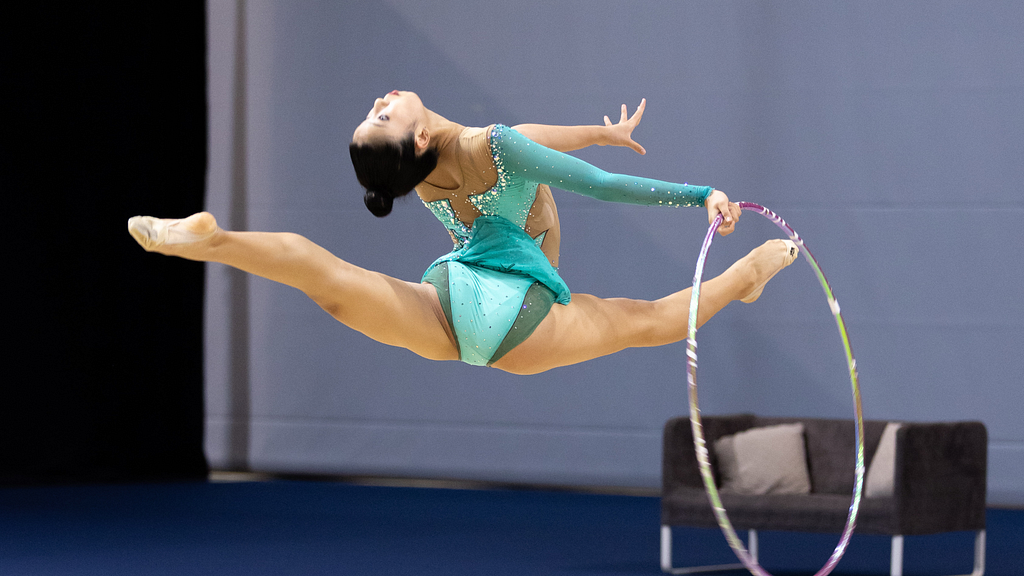
Key Takeaways:
- The Time Commitment: Transitioning to elite rhythmic gymnastics typically requires 20 to 25 hours of weekly training.
- The Academic Balance: High-performance sports and top-tier academics are not mutually exclusive; rigorous athletic discipline often enhances cognitive focus and time management.
- The “Slow Perfection” Method: Burnout prevention is crucial. Sustainable elite training prioritizes the athlete’s mental well-being and joy over instant results.
When parents think of rhythmic gymnastics, they often picture the beautiful final result on the competition carpet: the glittering leotards, the effortless leaps, and the seamless coordination of ribbons and clubs.
What the audience doesn’t see are the years of unseen grit that lead to that stage. Producing an elite athlete requires a delicate ecosystem of world-class coaching, fierce dedication, and a masterclass in time management.
Since establishing the academy in 2015, we have had the privilege of training over 1,500 local gymnasts. Having walked this path myself, I want to give you an inside look at what it truly takes for our girls to represent Singapore on the international stage.
The Blueprint of an Elite Gymnast: A Case Study
To understand the reality of high-performance sports, you only need to look at the developmental journey of two of our own incredible athletes, Maeve Teo and Annan Pan. After a grueling selection process, they made their major international debut representing Team Singapore at the 18th Asian Junior Championships in Thailand.
Their results were massive milestones for us — Maeve placing 5th in the Ribbon finals and Annan finishing 9th in Clubs during qualifiers. But as their coach, I know the real story is the immense resilience required to get there.
Transitioning an athlete from finding recreational joy in the sport to thriving on the elite stage is a highly systematic process. Both girls have been training with us at the Bianka Panova Academy for over six years. Leading up to major events, their training peaked at roughly 25 hours per week.
Yet, in a demanding educational landscape like Singapore’s, both athletes achieved this while studying at Raffles Girls’ School. Our data and personal experience show that the discipline learned on the rhythmic carpet — memorizing complex routines, regulating emotions under intense pressure, and practicing delayed gratification — translates directly to academic excellence.
The Philosophy of “Slow Perfection”
Behind every elite athlete must be a coach who understands that physical conditioning is only half the battle. Sports science confirms what I have learned through decades in this sport: mental well-being is the ultimate longevity tool in youth sports.
When I competed, I had the honor of achieving the Guinness World Record for scoring perfect 10s across all my routines. But when I brought my training methods to Singapore, I knew I had to implement a holistic philosophy. I call it Slow Perfection.
I always tell my girls: put in the effort, be truthful to yourself, do your best under pressure, and above all, have fun in the gym. Elite training is long and grueling; if we do not teach our gymnasts to be happy and enjoy the sport, they simply will not survive the journey.
Enduring the reality of elite gymnastics requires high athletic intelligence. But long-term, sustainable development — where the athlete feels deeply supported rather than crushed by pressure — is always our ultimate goal.
Frequently Asked Questions About Elite Gymnastics Training
To help parents navigate the reality of competitive sports in Singapore, here are my direct answers to the most common questions we receive at the academy:
What is the best age to start rhythmic gymnastics for competition? The ideal age to start is between 4 and 6 years old. An early introduction allows for the natural development of flexibility, core strength, and the fundamental motor skills essential for safely pursuing a competitive pathway later on.
How many hours do elite rhythmic gymnasts train? To compete at an elite level, gymnasts typically train between 20 to 25 hours per week. This ensures ample time for physical conditioning, mastery of the apparatus, and routine repetition, all without sacrificing their academic balance or mental well-being.
Can rhythmic gymnastics really help with school performance? Absolutely. Rhythmic gymnastics requires athletes to memorize highly complex, minute-and-a-half routines. This repetitive cognitive exercise significantly improves focus, memory retention, and time management, which directly aids our girls in demanding academic environments.
Bianka Panova Academy is Singapore’s premier rhythmic gymnastics school, founded by 9-time World Champion Bianka Panova. We are dedicated to empowering young girls through sport, offering pathways from recreational learning to elite international competition. Discover more at biankapanova.com.
Originally published on Medium.